
 Indonesia
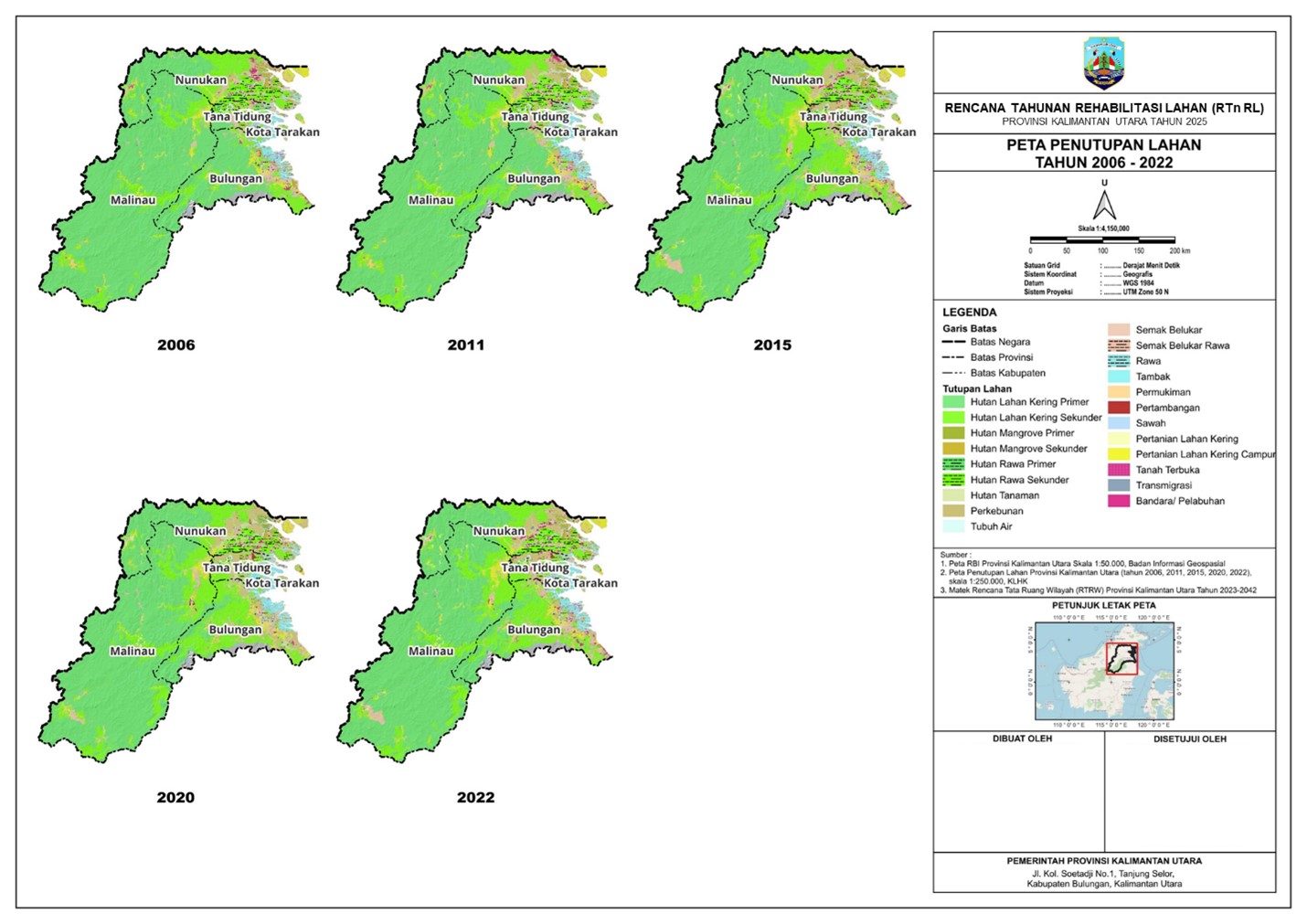
Annual Land Rehabilitation Plan, 2025, North Kalimantan Province
The preparation of the Annual Forest and Land Rehabilitation Plan (RTn RHL) is a response to the environmental and sustainability challenges facing Indonesia. Several key factors driving the implementation of this plan involve ecological, social, and economic aspects. There has been degradation of forest and land ecosystems caused by human activities such as illegal logging, forest encroachment, and land use change. This has led to the loss of biodiversity, soil erosion, and ecosystem imbalance. In addition, many communities depend on forests and land for their livelihoods, whether through agriculture, fishing, or other forest resource management activities. Therefore, the sustainability of these ecosystems is essential to ensure the economic well-being of the community.
The protection and conservation of biodiversity is one of the main objectives of forest and land rehabilitation. Unsustainable human activities have caused species extinction, and rehabilitation is a way to restore natural ecosystems. The North Kalimantan Provincial Forestry Service is obliged to carry out RHL activities to maintain environmental sustainability. These activities represent the government’s commitment to ecosystem restoration through a series of measures such as reforestation, restoration of degraded land, ecosystem monitoring, and public education on the importance of sustainability.
 The preparation of the North Kalimantan Province RTn RHL document is intended to present a complete and accurate plan/proposal for rehabilitation activities in North Kalimantan Province for the 2024 period, so that RHL activities can be carried out effectively and efficiently. The detailed objectives of preparing the North Kalimantan Province RTn RHL Document are: 1) To prepare an Annual Plan (RTn) for RHL in mineral areas in North Kalimantan Province; 2) To prepare an Annual Plan (RTn) for RHL in peat areas in North Kalimantan Province; 3) To integrate data related to RHL in mangrove areas in North Kalimantan Province.
The annual land rehabilitation plan covers various technical, environmental, social, and economic aspects aimed at improving the condition of land that has been damaged or degraded. Overall, the scope of the annual land rehabilitation plan covers technical, environmental, social, and economic aspects with the aim of ensuring that rehabilitated land can function properly again and provide sustainable benefits.
In general, the scope of the annual land rehabilitation plan includes the following main components: 1) Identification and Assessment of Land Conditions; 2) Determination of Rehabilitation Goals and Objectives; 3) Planning of Rehabilitation Technologies and Methods; 4) Management of Natural Resources and the Environment; 5) Implementation of Rehabilitation Activities; 6) Socialization and Extension; 7) Social and Economic Aspects; 8) Funding and Resources; and 9) Monitoring and Evaluation.
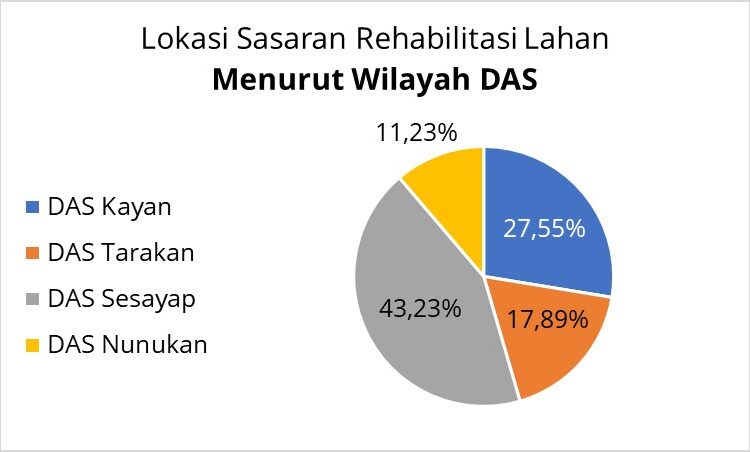
Based on the results of the analysis and planning of land rehabilitation in 10 target locations for land rehabilitation in North Kalimantan Province in 2025, the following conclusions can be drawn.
- There will be eight types of land rehabilitation activities in 2025, focusing on planting plans with a total cost of IDR 13,953,452,000.
- The annual plan for vegetative land rehabilitation activities in ten target locations for land rehabilitation in 2025 will use 161,434 plant seedlings in an area of 223.71 ha with an average cost per hectare of IDR 688,283,000.
- In 2025, there are no plans for technical civil engineering activities at the target land rehabilitation sites.